

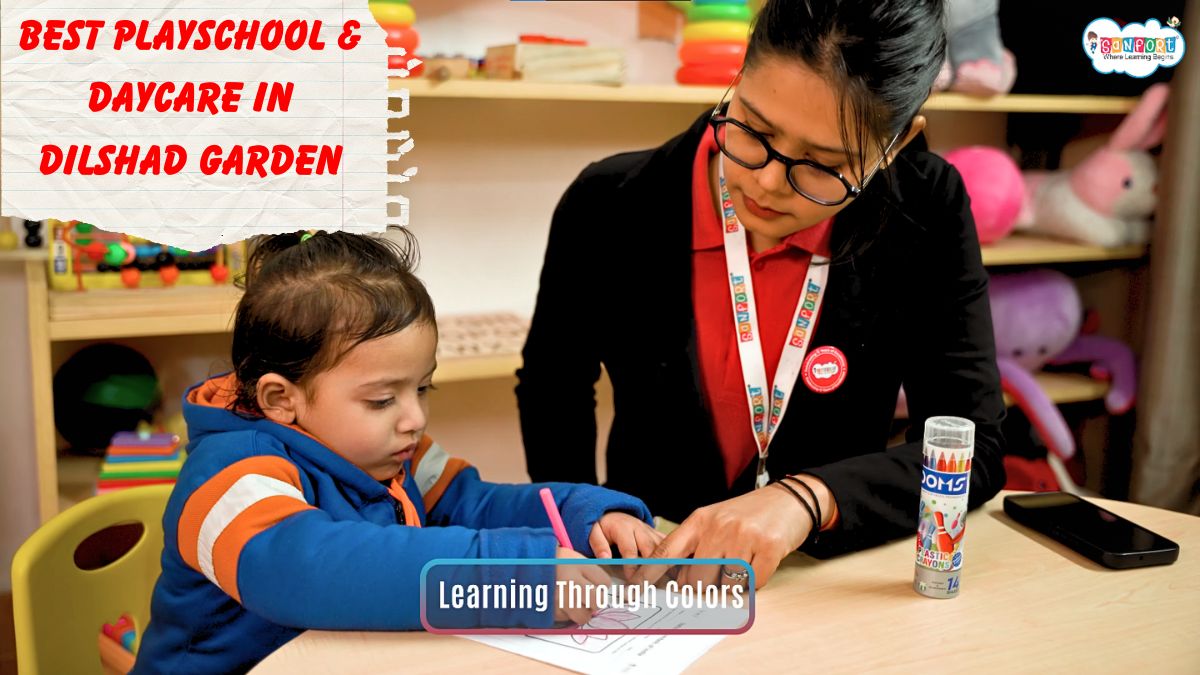
Are you a parent in Dilshad Garden, Nand Nagri, Harsh Vihar, or Dilshad Colony searching for a reliable playschool or daycare that won’t compromise on your child’s early education? You’re not alone. Every parent in East Delhi faces the same dilemma—finding a place that’s not just close to home but also nurtures their little one’s growth during those crucial early years.
There are dozens of preschools across Dilshad Garden and hundreds of parents, I’m sharing everything you need to know about choosing the right early learning centre for your child.
Why Location Matters More Than You Think
Let’s be real—Delhi traffic is brutal. If your child’s school is even 5 kilometres away, you’re looking at 30-45 minutes each way during peak hours. That’s why parents in Nand Nagri, Shalimar Garden, Jhilmil, and Harsh Vihar specifically search for options in Dilshad Garden—it’s centrally located and accessible from all these areas.
But here’s what most parents don’t consider: proximity isn’t just about convenience. For children aged 1.5 to 5.5 years, short commutes mean:
- Less stress and tiredness before they even reach school
- More time for proper breakfast at home
- Easier for working parents to manage drop-offs and pickups
- Quick access during emergencies
What Actually Makes a Playschool “Good”?
Forget fancy brochures. Here’s what you should actually look for:
1. Qualified and Experienced Educators
Check if teachers have proper training in early childhood education. At the very least, they should understand developmental milestones for different age groups. Don’t be shy—ask about their qualifications directly.
2. Age-Appropriate Curriculum
Your 2-year-old doesn’t need to learn algebra. They need sensory play, language development, and motor skills. A good school structures programs by age:
- 1.5-2.5 years: Focus on exploration, play-based learning, and basic social interaction
- 2.5-3.5 years: Structured activities that build confidence and independence
- 3.5-4.5 years: Creative thinking, critical reasoning, and foundational academic concepts
- 4.5-5.5 years: Preparation for formal schooling with curriculum alignment
3. Safety Infrastructure
Walk through the premises yourself. Check:
- Classroom hygiene and ventilation
- Outdoor play area safety (rounded edges, soft flooring)
- CCTV coverage
- Staff-to-child ratio (ideally 1:8 for toddlers, 1:12 for older kids)
- Emergency protocols
4. Daycare Facilities
If you’re a working parent, integrated daycare is a game-changer. Look for:
- Extended hours (some schools close by 1 PM, which doesn’t work for 9-to-5 parents)
- Meal provisions or facilities for packed food
- Nap areas for younger children
- Evening activities to keep kids engaged
The Dilshad Garden Advantage: Sanfort School’s Approach
Full disclosure: I’m writing this based on parent feedback and what I’ve observed works in this locality. Sanfort has two branches in this area:
Branch 1: A-2, G2, A Block, Dilshad Garden
Branch 2: D-60, Dilshad Colony, Near Karuna Hospital, Delhi – 110095
Contact:
Dilshad Garden: 9958270012
Dilshad Colony: 7042223537
Email: info@sanfortdilshadgarden.com
Here’s why parents in the area consistently mention them:
What Parents Actually Say Works
Progressive Learning Pathways: Instead of a one-size-fits-all approach, they’ve structured programs by developmental stage:
- SAN Toddler (1.5-2.5 years): Play-based exploration without academic pressure
- SAN Learner (2.5-3.5 years): Structured curriculum for confidence building
- SAN Junior (3.5-4.5 years): Holistic development with creativity and awareness
- SAN Senior (4.5-5.5 years): School readiness with curriculum alignment
Integrated Daycare: Both branches offer daycare facilities, which is rare for preschools in this area. Working parents don’t need to juggle multiple vendors for education and childcare.
Core Value Circle Curriculum: Their teaching method combines traditional learning with tech resources. It covers sensory refinement, language, motor skills, creativity, numeracy, and environmental awareness. It’s based on the UK’s Early Years Foundation Stage (EYFS) framework, which has global recognition.
Technology Integration: They use smart learning systems—not just tablets handed to kids, but interactive tools that make learning engaging.
Activity-Based Learning: Dedicated activity arcades with themed concepts like dollhouses, concept-based play areas that develop imagination and practical skills.
The Questions You Should Ask During Your Visit
Don’t just take a tour. Ask these specific questions:
- “What’s your teacher-to-child ratio?” (Red flag if they hesitate or it’s more than 1:15)
- “How do you handle behavioural issues?” (You want positive reinforcement, not punishment-based systems)
- “What’s your curriculum based on?” (There should be a structured framework, not random activities)
- “Can I see a typical daily schedule?” (Balance of free play, structured learning, outdoor time)
- “What are your hygiene protocols?” (Especially post-COVID, this matters)
- “How do you communicate with parents?” (Daily updates, parent-teacher meetings, progress reports)
- “What’s your emergency procedure?” (Medical situations, natural disasters)
Red Flags to Watch Out For
Based on parent complaints I’ve heard over the years:
- Overcrowded classrooms: If you see 20+ kids with one teacher, run
- Dirty or poorly maintained facilities: This shows negligence
- Hidden fees: Admission fee is just the start; ask for a complete fee structure
- No parent access: Schools that don’t allow surprise visits are hiding something
- Unclear curriculum: If they can’t explain what they teach and why, that’s a problem
- High teacher turnover: Ask how long teachers have been there
- No outdoor play: Physical development is as important as cognitive development
Why Early Childhood Education Actually Matters
Look, I’m not going to sugarcoat this—many parents still think playschool is just “glorified babysitting.” That mindset is outdated and frankly, harmful to your child’s development.
Research consistently shows that quality early childhood education:
- Develops social skills that determine success in formal schooling
- Builds cognitive foundations for literacy and numeracy
- Enhances emotional regulation and resilience
- Creates independence and confidence
- Establishes lifelong learning habits
The years between 1.5 and 5.5 are when your child’s brain is developing most rapidly. Structured early education during this window has measurable long-term benefits.
What About Tuition Services?
Some schools now offer integrated after-school tuition for older kids. If you have multiple children at different stages, having everything under one roof saves time and coordination hassles. Ask if they provide:
- Homework help and supervision
- Subject-specific tutoring
- Exam preparation support
- Homework completion assistance
Making Your Decision
Here’s my honest advice after observing hundreds of parent decisions:
Visit at least 3 schools. Don’t commit after seeing just one, no matter how good it looks. Compare facilities, fee structures, and teaching approaches.
Talk to current parents. Schools will give you a polished presentation. Parents will tell you the unfiltered truth. Stand at the gate during pickup time and chat with other parents.
Trust your child’s reaction. When you visit with your child, observe their response to the environment, teachers, and other kids. Children have good instincts about spaces where they’ll be happy.
Consider the full package. Lowest fee doesn’t mean best value. Factor in location, daycare availability, curriculum quality, and safety.
Don’t delay. Admissions in good schools fill up fast, especially for the academic year starting in April. If you’re reading this in December-February, start your search now.
Why Parents Choose Dilshad Garden Schools
The Dilshad Garden and Dilshad Colony area has emerged as an education hub in East Delhi because:
- Central location accessible from Nand Nagri, Harsh Vihar, Jhilmil, and Shalimar Garden
- Developed infrastructure with wide roads (unlike inner Nand Nagri lanes)
- Multiple schools creating competitive quality standards
- Balanced mix of affordability and quality
- Well-connected by metro (Dilshad Garden Metro Station on Red Line)
Final Thoughts
Choosing your child’s first school is overwhelming. You’re not just picking a place for education—you’re choosing the people who’ll influence your child’s personality, confidence, and love for learning.
Don’t make this decision based on advertisements or recommendations alone. Visit schools physically. Ask tough questions. Observe classrooms during working hours, not just during admission tours when everything is staged.
For families in Dilshad Garden, Dilshad Colony, Nand Nagri, Harsh Vihar, and surrounding areas, proximity combined with quality curriculum and safety infrastructure should be your primary criteria. Whether you choose Sanfort or another institution, make sure it checks all the boxes that matter for your child’s specific needs.
Remember—the “best” school is the one that’s best for YOUR child, not the one with the fanciest infrastructure or lowest fees.
Ready to take the next step?
Visit schools during working hours (9 AM to 6 PM, Monday to Saturday). Most good schools allow walk-in visits, though calling ahead is courteous.
For Sanfort Dilshad Garden and Dilshad Colony:
- Dilshad Garden: 9958270012
- Dilshad Colony: 7042223537
- Email: info@sanfortdilshadgarden.com
- View Location